UNDERPAID CLAIMS
Was Your Insurance Claim Underpaid?
Getting a payment from your insurance company doesn’t always mean your claim has been fully or accurately settled.
A property insurance estimate may leave out necessary repairs, underestimate quantities, use an incomplete scope of work, or fail to account for conditions discovered during the repair process.
The result can be a significant difference between what the insurance company estimated and what it actually takes to properly restore your property.
The J Group helps Oklahoma property owners understand that difference.
WHY ESTIMATES CAN DIFFER
Measurements & Quantities
Roof areas, wall dimensions, flooring quantities, waste factors, and other measurements can affect the overall scope and cost of restoration.
Missing Scope Items
Some necessary labor, materials, accessories, or related operations may not appear in an initial estimate.
Repair Method
The estimated repair method may differ from what is required to properly access, remove, replace, finish, or restore damaged materials.
Code Requirements
Applicable building codes may require additional work when damaged components are repaired or replaced.
Manufacturer Requirements
Installation instructions and product requirements can affect the materials and procedures needed for a proper repair.
Price Differences
Labor, material, equipment, and subcontractor costs can differ from assumptions used in an estimate.
DOCUMENTS TO COMPARE
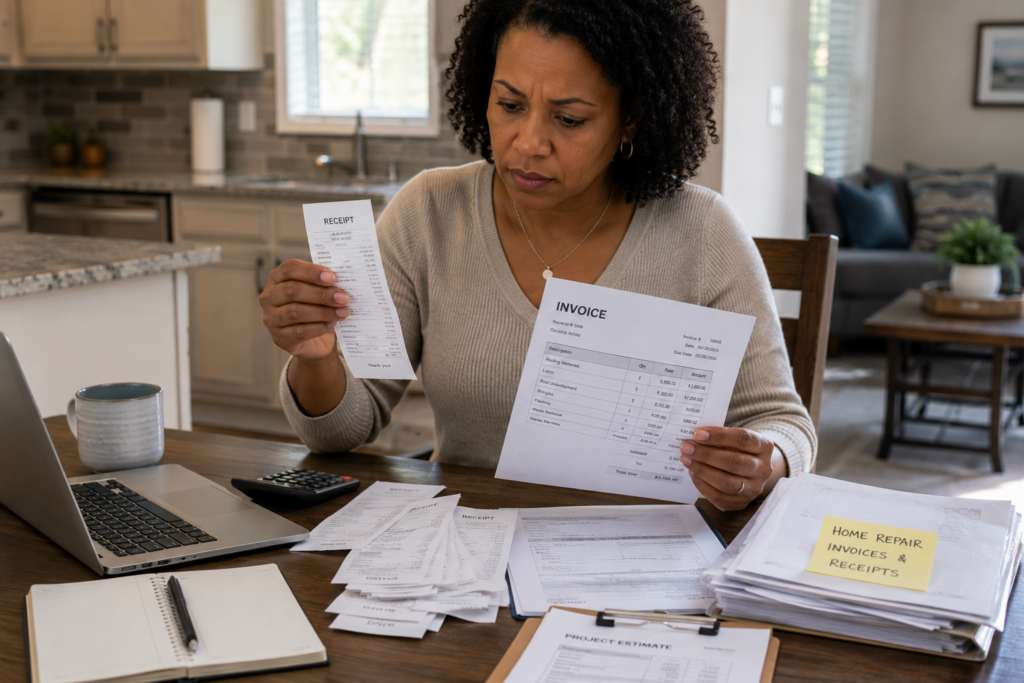
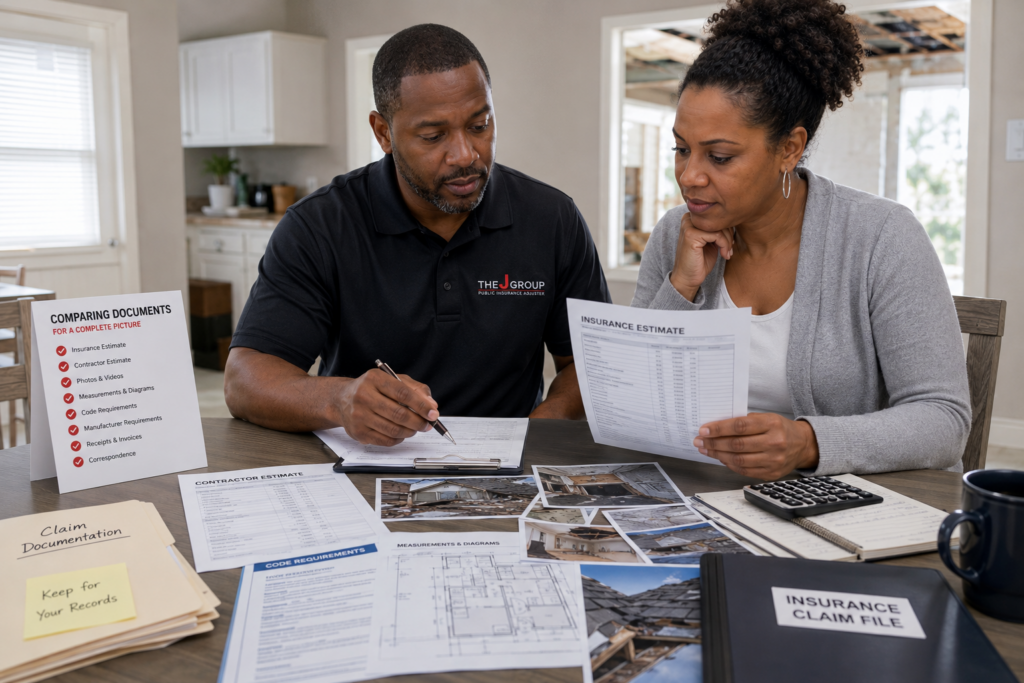
Before making decisions about your claim, consider comparing the available documentation, including:
- Insurance carrier estimate and payment summary
- Contractor or restoration estimate
- Photographs and videos of damaged areas
- Measurements, diagrams, and inspection documentation
- Applicable building-code information
- Manufacturer installation requirements
- Material identification or availability information
- Invoices, receipts, proposals, and subcontractor pricing
- Claim correspondence and supplemental documentation
The Clarity Standard™
A structured approach to help a commercial property owners understand the key elements of their claim before making important decisions.
Coverage
Understand the policy provisions that may apply to the building, business property, operations, and other parts of the reported loss.
Condition
Document the actual condition of the building and affected property, including damage, quantities, materials, and related conditions.
Restoration
Identify the work required to properly restore the property while considering construction standards, codes, manufacturer requirements, access, sequencing, and business operations.
Learn more about The Clarity Standard™ and how it guides our process: Visit The Clarity Standard™ page >>
QUESTIONS WORTH ASKING
Is the Damage Fully Documented?
Confirm that all affected areas and related conditions are represented in the claim documentation.
Are the Quantities Accurate?
Compare measurements, counts, material quantities, and waste assumptions with the property.
Is the Repair Method Complete?
Determine whether the scope includes the operations necessary to perform the repair from start to finish.
Are Required Components Included?
Review accessories, flashing, underlayment, finishes, protection, cleanup, and other items associated with the restoration.
Are Code or Manufacturer Requirements Relevant?
Identify requirements that may affect how damaged materials can be repaired or replaced.
FREQUENTLY ASKED QUESTIONS
It generally describes a situation where the amount or scope allowed for a covered loss may not reflect all documented work or costs required for restoration.
No. Estimates may use different measurements, prices, assumptions, or scopes. Differences should be supported with clear documentation.
A supplement is additional claim documentation submitted for consideration when new information, additional damage, changed quantities, or necessary scope items are identified.
It is an initial review designed to help you understand the claim estimate, documented property condition, and restoration questions before deciding what to do next.
It is an initial review designed to help property owners organize the claim situation, understand key documentation, and identify questions about coverage, condition, and restoration before making important decisions.
BEFORE YOU ASSUME THE ESTIMATE IS COMPLETE, COMPARE IT TO THE PROPERTY.
Schedule your Complimentary Clarity Review™ to better understand the claim estimate, documented damage, and restoration requirements before making your next decision.